
⚡ Quick Takeaway in 10 Seconds (Mono PERC vs TopCon Solar Panels):
- Summer Heat Performance: TopCon temperature coefficient is -0.30%/°C (vs -0.35% for Mono PERC) ➔ Yields +2.5% to +3.0% more daily kWh during Gujarat’s 42°C+ summer heat.
- Bifacial Albedo Gain: TopCon delivers 80% – 85% bifaciality (vs 70% for Mono PERC) on reflective factory sheds and white tiled terraces.
- 25-Year Economics: TopCon costs only 3.9% more upfront but generates over ₹18.5 Lakhs in additional clean electricity value on a 100 kW commercial system.
The Great Solar Panel Dilemma in 2026
When evaluating Mono PERC vs TopCon solar panels for a rooftop installation in Gujarat, the single most critical decision is selecting the right photovoltaic cell technology. For nearly a decade, P-Type Mono PERC (Passivated Emitter and Rear Cell) dominated the market as the industry benchmark.
However, over the past two years, N-Type TopCon (Tunnel Oxide Passivated Contact) technology from global leaders like WAAREE Solar has taken over advanced manufacturing lines, recognized by the Ministry of New and Renewable Energy (MNRE).
With Gujarat’s intense summer heat—where ambient temperatures frequently cross 42°C and rooftop surface temperatures exceed 65°C—module efficiency drops significantly under thermal stress. In this head-to-head engineering analysis of Mono PERC vs TopCon solar panels, we examine real-world generation numbers, degradation data, and heat coefficients backed by National Renewable Energy Laboratory (NREL) testing standards.
📑 Quick Table of Contents
- 1. Direct Specification Comparison: Mono PERC vs TopCon
- 2. Why Gujarat’s High Summer Heat Favors TopCon
- 3. Bifacial Advantage: Capturing Reflected Roof Albedo
- 4. Price vs. ROI: Does TopCon Justify the Extra Cost?
- 5. How to Tell If You Are Getting Genuine TopCon Panels
- 6. Frequently Asked Questions (FAQ)
⚡ Direct Specification Comparison: Mono PERC vs TopCon Solar Panels
Here is how Mono PERC vs TopCon solar panels compare across key technical parameters:
| Technical Parameter | Mono PERC (P-Type) | N-Type TopCon | Gujarat Climate Winner |
|---|---|---|---|
| Silicon Substrate Type | P-Type (Boron Doped) | N-Type (Phosphorus Doped) | TopCon (Zero Boron-Oxygen defect) |
| Module Cell Efficiency | 20.8% – 21.6% | 22.2% – 23.5% | TopCon (+1.5% to +2.0% absolute gain) |
| Temperature Coefficient | -0.35% / °C | -0.30% / °C | TopCon (Generates 2.5% more at 45°C ambient) |
| Bifaciality Factor | 70% ± 5% | 80% – 85% | TopCon (Higher rear-side generation) |
| First-Year Degradation | ~2.0% (LID sensitive) | < 1.0% | TopCon (Negligible initial power loss) |
| Annual Degradation Rate | 0.55% per year | 0.40% per year | TopCon (Retains 87.4% power at Year 30) |
| Low-Light / Diffuse Performance | Standard | Superior (+3% in cloudy monsoon) | TopCon |
| Performance Warranty | 25 Years | 30 Years | TopCon (+5 Years extra coverage) |
🌡️ Why Gujarat’s High Summer Heat Favors TopCon Over Mono PERC
When comparing Mono PERC vs TopCon solar panels, thermal degradation plays a decisive role. Standard test conditions (STC) measure solar panels at a mild cell temperature of 25°C. But on an industrial shed roof in Vapi or a residential bungalow in Ahmedabad, panels operate between 55°C and 68°C in May and June—a thermal rise of +35°C to +43°C above lab conditions.
The Heat Coefficient Math:
- Mono PERC Temperature Coefficient (-0.35%/°C):
At 65°C cell temperature (+40°C rise), a Mono PERC panel loses 14.0% of its rated power output.
- TopCon Temperature Coefficient (-0.30%/°C):
At 65°C cell temperature (+40°C rise), a TopCon panel loses only 12.0% of its rated power output.
💡 Real-World Impact: On hot summer afternoons when air conditioners draw maximum electricity, TopCon panels deliver 2.5% to 3.0% more continuous power solely due to better thermal tolerance. For system sizing and costs, review our guide on solar rooftop price in Gujarat.
🔄 Bifacial Advantage: Capturing Reflected Roof Albedo
Both Mono PERC and TopCon are available in bifacial glass-to-glass designs. However, comparing Mono PERC vs TopCon solar panels reveals that TopCon boasts an 80% to 85% bifaciality factor compared to 70% for Mono PERC.
If your panels are installed on:
- An elevated structure on a white reflective tiled roof.
- An industrial factory shed painted with solar-reflective coating.
The rear side of a TopCon bifacial module captures an additional 8% to 15% clean power from diffuse reflected sunlight (albedo) at zero extra roof space requirement.
💰 Price vs. ROI: Does TopCon Justify the Extra Cost Over Mono PERC?
Let us evaluate the economics of a 100 kWp commercial system comparing Mono PERC vs TopCon solar panels in Gujarat:
| System Parameter | 100 kWp Mono PERC Plant | 100 kWp N-Type TopCon Plant | Difference |
|---|---|---|---|
| Capital Investment | ₹38,00,000 | ₹39,50,000 | +₹1,50,000 (+3.9%) |
| Annual Generation (Year 1) | 1,48,000 Units | 1,56,800 Units | +8,800 Units (+5.9%) |
| Annual Value of Extra Units (@ ₹7.50/u) | — | ₹66,000 / Year | Extra Revenue |
| Payback of Price Difference | — | — | Only 2.2 Years |
| Total Extra Value (25 Years) | — | ₹18,50,000+ | Massive Net Profit |
For a mere 3.9% upfront cost difference, a TopCon installation produces over ₹18.5 Lakhs in additional electricity value over its operating life.
For complete turnkey engineering designs and Tier-1 brand selections (including Adani, Waaree, Goldi, and Canadian Solar), see our definitive manual on solar panel installation in Gujarat.
🔍 How to Tell If You Are Getting Genuine TopCon Panels
Unfortunately, some uncertified contractors market older Mono PERC stock as TopCon. Before signing an installation contract, inspect the following:
1. Module Datasheet: Ensure the temperature coefficient is `-0.30%/°C` or better, and the cell type specifies `N-Type TOPCon`.
2. ALMM Enlistment: Verify that the specific model number appears on the latest Ministry of New and Renewable Energy (MNRE) ALMM gazette list.
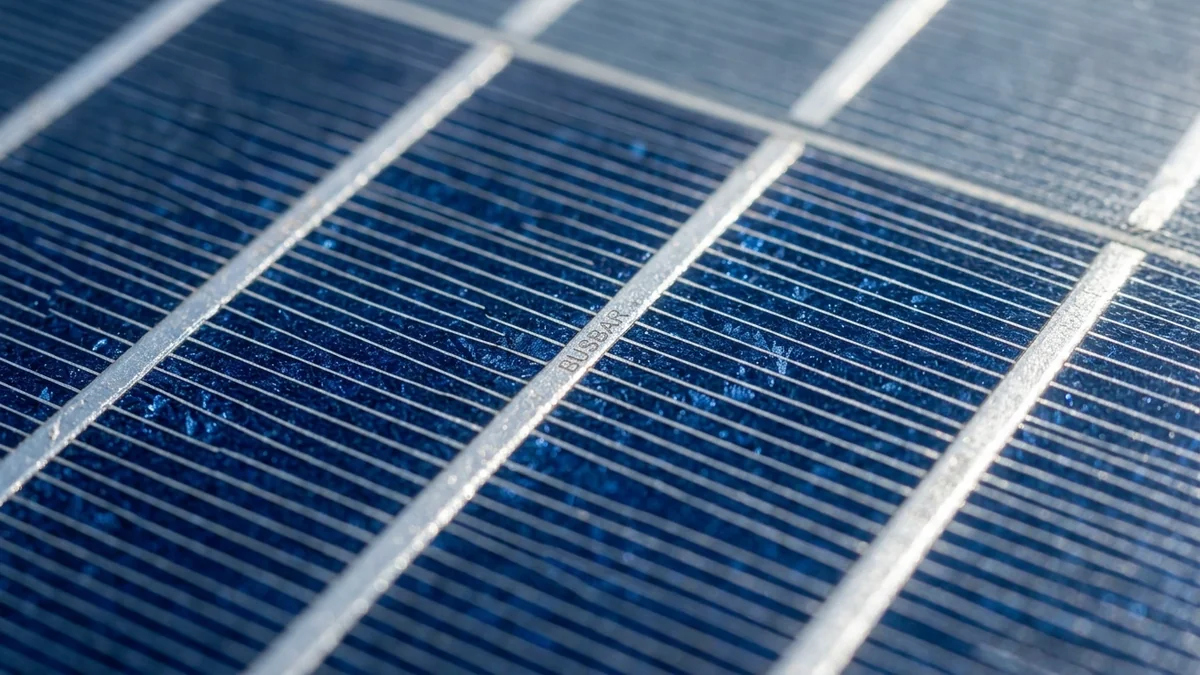
3. Busbar Count: TopCon modules feature multi-busbar (MBB – 16BB to 18BB) technology with micro-thin round wire ribbons.
4. Warranty Document: Demand written documentation confirming a 30-year linear performance warranty with Year-30 retained output above 87%.
❓ Frequently Asked Questions (FAQ)
Q1. Is Mono PERC technology completely obsolete in 2026?
No. Mono PERC remains a dependable, battle-tested technology. It is suitable for budget-constrained projects or residential installations where roof space is abundant. However, for maximum energy density and hot climates like Gujarat, TopCon has become the preferred industry standard.
Q2. Do TopCon solar panels require special inverters?
No. TopCon modules work seamlessly with all standard on-grid and hybrid string inverters (such as Solis, Growatt, Sungrow, and Polycab). However, ensure your inverter’s maximum DC input current (usually 14A to 16A per string) accommodates the higher short-circuit current of modern TopCon cells.
Q3. How do TopCon panels perform in Gujarat’s dusty coastal industrial zones?
TopCon panels feature anti-reflective coated tempered glass that resists salt-mist corrosion and dust adhesion. In industrial coastal hubs like Vapi, Sarigam, and Daman, regular bi-weekly water washing maintains peak generation efficiency.
📞 Consult South Gujarat’s TopCon Solar Engineering Specialists
Want an honest yield simulation comparing Mono PERC vs TopCon solar panels for your specific roof coordinates?
- Green Energy Solar Authority
- Offices: Vapi: Shiven Magnus, Salvav Bridge | Daman: Shop No. 05, India House
- Turnkey Consultation: www.greenenergy.ind.in
Ready to Cut Your Gujarat Power Bills by up to 90%?
Claim your ₹78,000 PM Surya Ghar DBT subsidy or calculate custom industrial net-metering savings with South Gujarat’s trusted WAAREE Channel Partner.