Green Energy - Solar & Renewable Energy Authority in Gujarat
Trusted
Solar Panel Installation in Gujarat Complete Rooftop & EPC Guide
Cut your monthly electricity bills by up to 90% with Gujarat’s leading rooftop solar installation company. We provide complete solar panel installation across Ahmedabad, Surat, Vadodara, Rajkot, and Vapi for homes, commercial offices, and industrial factories.
Get direct ₹78,000 government subsidy credit in your bank account under PM Surya Ghar Muft Bijli Yojana with end-to-end DISCOM net metering approval and zero paperwork hassle.

25+ MW
Installed Capacity across Gujarat
₹78,000
Max PM Surya Ghar DBT Subsidy
40% AD
Sec 32 Tax Depreciation in Year 1
₹2.25/u
GERC Annual Surplus Banking Buyback
RESIDENTIAL VS COMMERCIAL SOLAR
Gujarat Solar at a Glance: Residential vs Industrial
Compare technical parameters, subsidies, net-metering policies, and payback periods between home setups and factory installations across South Gujarat.
Parameter
Residential Rooftop (1 kW to 10 kW)
Commercial & Industrial (25 kW to 1,000+ kW)
Target Audience
Independent bungalows, row houses, housing societies
Textile mills, chemical plants, packaging units, warehouses
Applicable DISCOM
DGVCL, Torrent Power, UGVCL, MGVCL, PGVCL
DGVCL (HT-1, LT-2, NRGP tariffs)
Government Incentive
PM Surya Ghar Direct Subsidy (up to ₹78,000)
40% Accelerated Depreciation (Section 32, Income Tax Act)
Metering Mechanism
1:1 Net Metering (Bi-directional meter)
Net Metering (up to 1 MW sanctioned load) / Gross Metering
Surplus Energy Buyback
₹2.25 per unit (GERC APPC settlement on March 31)
Set-off against monthly consumption bill / APPC rate
Typical Payback Period
3.2 to 3.8 Years
2.5 to 3.2 Years (accounting for tax depreciation)
Equipment Standard
ALMM-listed Mono-PERC / TOPCon DCR modules
High-wattage Bifacial TOPCon modules (550Wp – 650Wp)
HOW GRID-TIED SOLAR WORKS
How Rooftop Solar Works with DGVCL Grid-Tied Systems
You do not need heavy, expensive battery banks that require acid top-ups and replacement every 4 years. The public utility grid acts as your virtual battery.
1. Photons Hit Panels
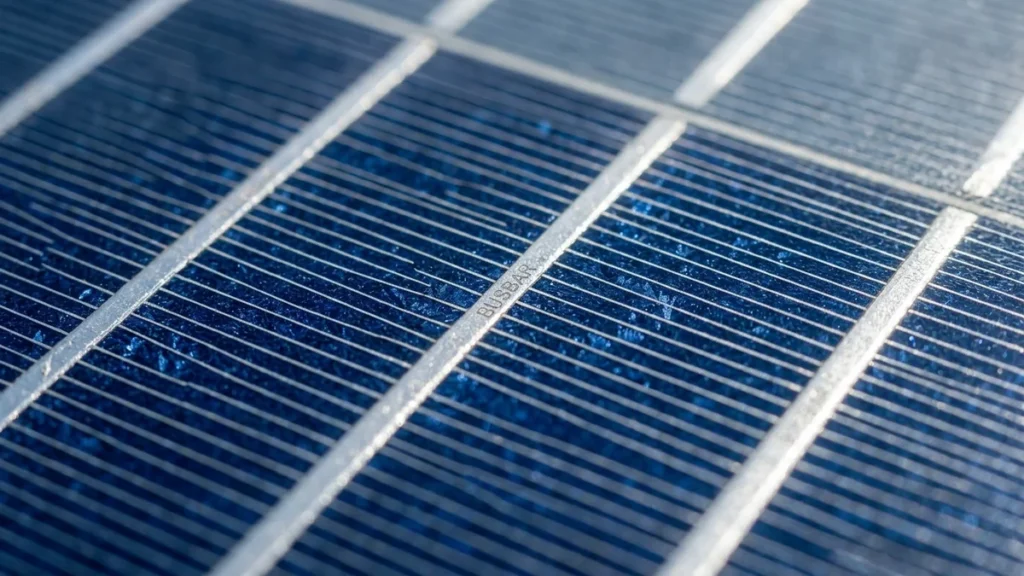
Silicon solar cells absorb photons and generate raw Direct Current (DC) power from Gujarat’s intense 300+ days of sunlight.
2. Inverter Conversion
The grid-tied inverter transforms DC electricity into stable 230V single-phase or 415V three-phase AC matching DGVCL grid frequency (50 Hz).
3. Instant Self-Consumption
Your running appliances—air conditioners, pumps, lights, or factory looms—draw this solar power first with zero friction.
4. Bi-Directional Export
If generation exceeds daytime use, excess units spin your bi-directional meter backward into DGVCL public grid.
5. Nighttime Grid Sync
At night, draw power normally from DGVCL. At billing cycle end, DGVCL bills you solely for Net Imported units.
HOME ROOFTOP SOLUTIONS
Residential Solar Systems: Capacities, Power Output & Costs
Installing a system larger than your sanctioned load requires an upfront load enhancement request with DGVCL. Here is the realistic cost and generation breakdown for Gujarat homes.
3 kW Rooftop System
Ideal for 2–3 BHK Homes & Villas
- Daily Generation: 12.0 – 14.0 Units
- Monthly Generation: 360 – 420 Units
- Shadow-Free Roof Area: 240 – 300 Sq. Ft.
- Turnkey Project Cost: ₹1,65,000 – ₹1,80,000
- PM Surya Ghar Subsidy: ₹78,000 (Direct DBT)
- Net Customer Outlay: ₹87,000 – ₹1,02,000
5 kW Rooftop System
Ideal for Large Homes, ACs & EV Charging
- Daily Generation: 20.0 – 23.0 Units
- Monthly Generation: 600 – 690 Units
- Shadow-Free Roof Area: 400 – 500 Sq. Ft.
- Turnkey Project Cost: ₹2,60,000 – ₹2,85,000
- PM Surya Ghar Subsidy: ₹78,000 (Max Cap)
- Net Customer Outlay: ₹1,82,000 – ₹2,07,000
10 kW Rooftop System
Ideal for Bungalows, Small Offices & Clinics
- Daily Generation: 40.0 – 46.0 Units
- Monthly Generation: 1,200 – 1,380 Units
- Shadow-Free Roof Area: 800 – 1,000 Sq. Ft.
- Turnkey Project Cost: ₹4,80,000 – ₹5,30,000
- PM Surya Ghar Subsidy: ₹78,000 (Max Cap)
- Net Customer Outlay: ₹4,02,000 – ₹4,52,000
Mandatory Conditions to Claim PM Surya Ghar Subsidy in Gujarat
1. DCR Modules Only: Solar cells and modules must be manufactured in India. Non-DCR or imported modules will be rejected during DGVCL portal inspection.
2. ALMM Verification: The module brand must appear on the MNRE Approved List of Models and Manufacturers.
3. Empanelled Vendor Execution: Installations must be carried out by authorized vendors registered on the National Portal.
4. DGVCL Grid Sync: Direct Benefit Transfer (DBT) subsidy releases straight into your Aadhaar-linked bank account within 30 days of bi-directional meter synchronisation.
GIDC INDUSTRIAL & COMMERCIAL EPC
Commercial Solar: Financial Engineering for GIDC Units
Industrial electricity in Gujarat is expensive. Commercial consumers under DGVCL tariffs (NRGP, LT-2, HT-1) pay between ₹7.50 and ₹9.50 per unit, plus fuel surcharges (FPPPA) and electricity duty. Solar slashes that variable operating expense into a predictable fixed asset.
The 40% Accelerated Depreciation (AD) Tax Advantage
Under Section 32 of the Income Tax Act, commercial and industrial enterprises buying solar equipment under the CAPEX model can write down 40% of the asset value in Year 1 alone. For a typical ₹38 Lakh 100 kWp plant, a corporate entity in the 25.17% tax bracket saves ₹3,82,584 in corporate tax in the very first financial year.
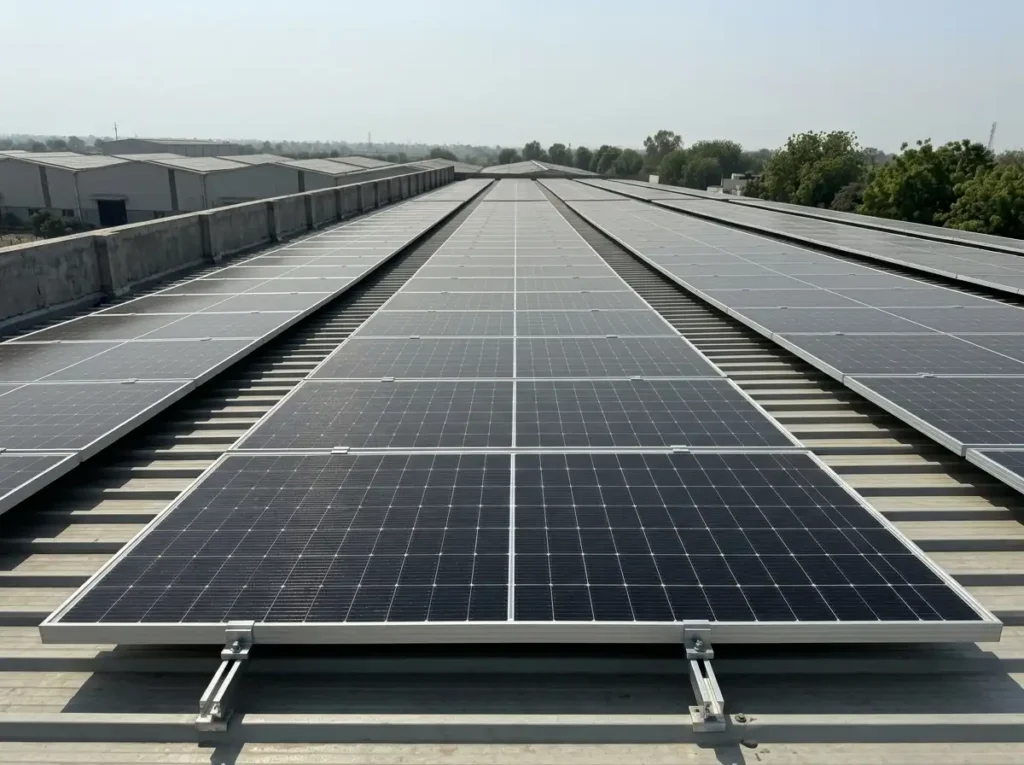
100 kWp Industrial Rooftop Case Model
- Annual Solar Generation: 1,45,000 kWh Units
- Effective Grid Tariff Offset: ₹8.50 / Unit
- Annual Electricity Cost Slashed: ₹12,32,500
- First Year Tax Shield (40% AD): ₹3,82,584
- Net Cash Retained (5 Years): ~₹48,00,000
- Capital Payback Period: 2.8 Years
CLIMATE & INDUSTRIAL ENGINEERING
Engineering Standards Built for South Gujarat Weather
South Gujarat presents distinct engineering challenges. Surat and Hazira face salty coastal humidity and chemical atmospheric corrosion. Vapi and Sarigam host heavy chemical estates where acidic vapours destroy standard steel.
80-Micron Hot-Dip Galvanised Structures
Surat, Hazira, and Vapi feature high coastal humidity and industrial chemical vapours. Cold-galvanised light metal rusts within two monsoons. We insist on custom-fabricated steel dipped in molten zinc baths to achieve 80-micron minimum coating thickness, resisting coastal corrosion for 25+ years.
Zero-Leakage Metal Shed Seam Clamping
Drilling screws directly through trapezoidal or standing seam factory metal sheets voids shed waterproofing warranties. We engineer non-penetrating anodised aluminium seam clamps and certified EPDM-gasketed saddle mounts that lock panels down tight against 150 km/h wind gusts without making a single roof hole.
Dual Chemical Earthing & Class-I SPDs
Lightning and grid fluctuations destroy sensitive string inverter microprocessors in milliseconds. Every installation includes dual copper-bonded chemical earthing pits tested below 5 Ohms, Type-II Surge Protective Devices in AC/DC boxes, and flame-retardant UV-resistant XLPO cables.
PAPERWORK & GRID APPROVAL ROADMAP
From Site Survey to Grid Synchronization: 5 Transparent Steps
Getting solar on your roof is not just about mounting hardware. The paperwork, grid approvals, and meter testing require organized execution with your local DGVCL sub-division office.
Step 1: Digital Registration & Feasibility Application
⏱️ Timeline: Day 1 – 3
We register your consumer number on the National Rooftop Solar Portal (pmsuryaghar.gov.in) and submit the preliminary solar application. For industrial HT connections, application routing goes through GEDA and DGVCL Circle Offices.
Step 2: DISCOM Technical Feasibility Approval
⏱️ Timeline: Day 4 – 10
DGVCL engineers review the loading on your local distribution transformer. Under GERC guidelines, solar capacity on any local distribution transformer cannot exceed 50% of its rated transformer capacity. Once cleared, DGVCL issues the official Technical Feasibility Letter.
Step 3: Turnkey Procurement & Mechanical Mounting
⏱️ Timeline: Day 11 – 18
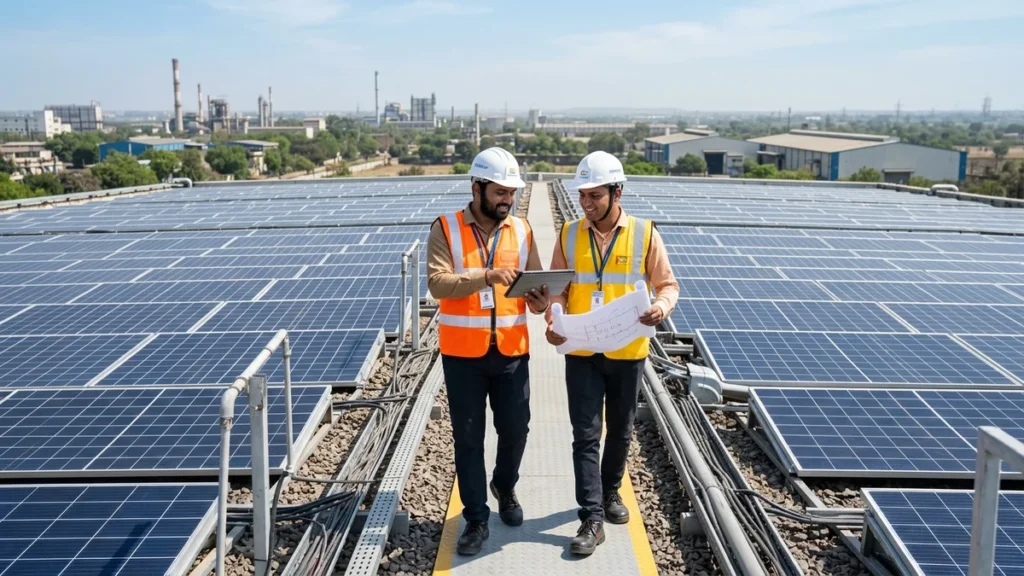
Our certified crew anchors foundation pads or clamps mounting structures to roof beams, bolts down high-efficiency mono-crystalline or bifacial solar panels, mounts the string inverter on a shaded wall, and runs UV-resistant DC cabling.
Step 4: Work Completion Report & Meter Testing
⏱️ Timeline: Day 19 – 25
We prepare the complete Work Completion Report with module flash-test data and earthing test reports (<5 Ohms). The bi-directional net meter is dispatched to DGVCL's accredited meter laboratory for calibration and testing.
Step 5: Bi-Directional Meter Installation & Grid Sync
⏱️ Timeline: Day 26 – 30
DGVCL line staff visit your property, remove the old unidirectional meter, bolt down the newly tested bi-directional meter, connect CT/PT units, and power up the system. The joint inspection report is signed on-site and uploaded to the national portal.
VERIFIED EPC CASE STUDIES
Proven Industrial & Commercial Projects in South Gujarat
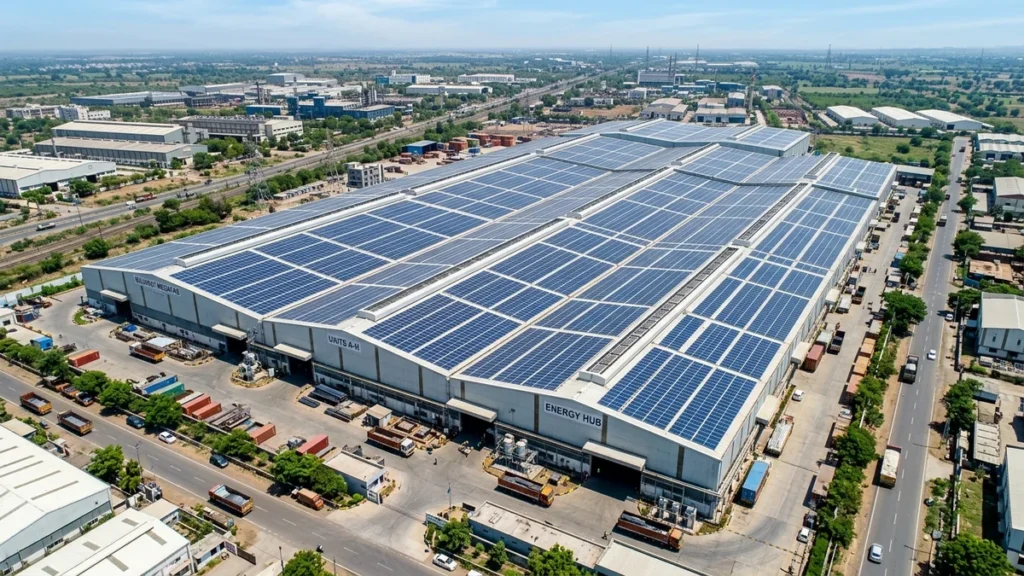
Nothing proves capability like operational megawatt-scale performance in our local industrial backyard. Here are real commercial solar plants operating in South Gujarat.
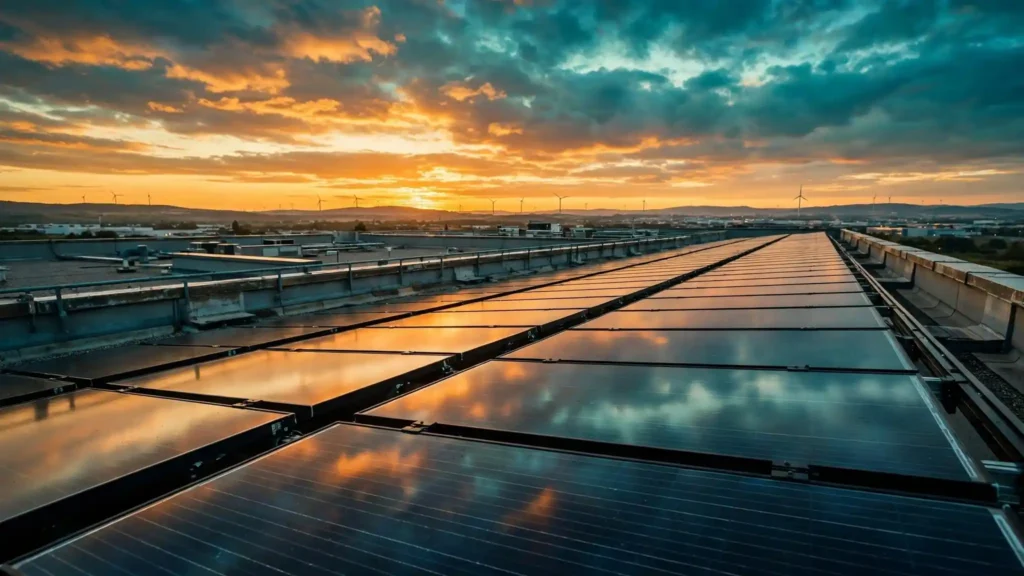
Strata Geosystems (India) Pvt. Ltd.
⚡ 1,250 kWp (1.25 MW) Grid-Connected Solar Rooftop
📍 Daheli, Vapi Industrial Belt, Gujarat
Tier-1 Bifacial PV Modules mounted on standing seam aluminium clamps with remote SCADA string monitoring. Slashed daytime factory power costs by ~68%, saving over ₹1.4 Crore per year in electricity expenses.
Jani Sales Pvt. Ltd.
⚡ 1,200 kWp (1.2 MW) Industrial Rooftop Setup
📍 Vapi Industrial Area, Gujarat
High-load paper and packaging manufacturing plant. Direct HT-1 grid synchronisation running heavy machinery while sheltering factory sheds from direct heat radiation, lowering indoor shop-floor temperatures by 3°C to 4°C.
Super Aluminum
⚡ 20 kWp Commercial Solar System
📍 Surat, Gujarat
Commercial fabrication and office facility. Zeroed out monthly daytime utility bills, amortizing initial project capital costs within 38 months of commissioning.
Explore In-Depth Gujarat Solar Guides & Cost Breakdowns
Deep-dive into our localized research reports on subsidy calculation, DISCOM net-metering legal frameworks, TopCon climate efficiency, and regional industrial engineering standards.
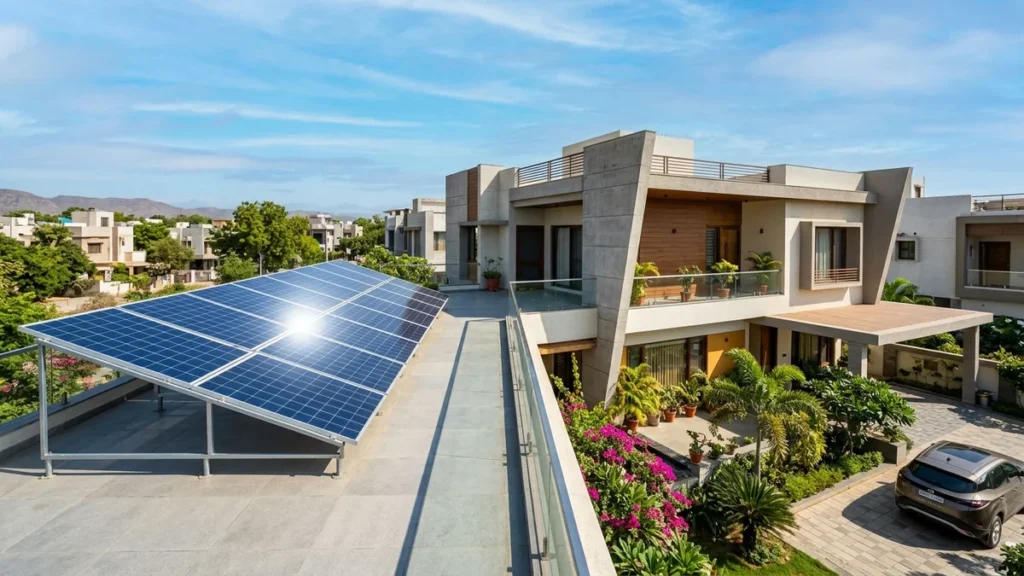
Complete walkthrough of the ₹78,000 central DBT subsidy, DGVCL online feasibility, and DISCOM vendor selection.
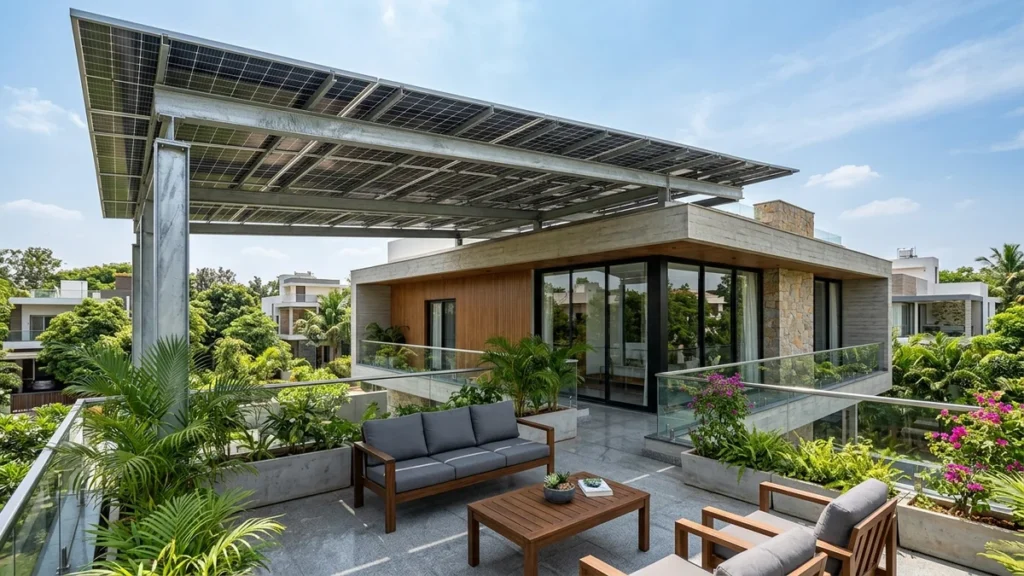
Exact turnkey costs, net investment after ₹78k subsidy, monthly bill reductions, and 3.1-year payback calculation.
GERC 100% Contract Demand guidelines, CEIG safety inspection clearance, and 40% corporate tax depreciation shield.
Head-to-head comparison of 42°C+ summer heat coefficient, 85% bifacial gain, and 30-year linear degradation rates.
15+ MW industrial project portfolio across Vapi GIDC, Sarigam, Umbergaon & Daman with 24-hour local SLA.
Frequently Asked Questions about
Solar in Gujarat
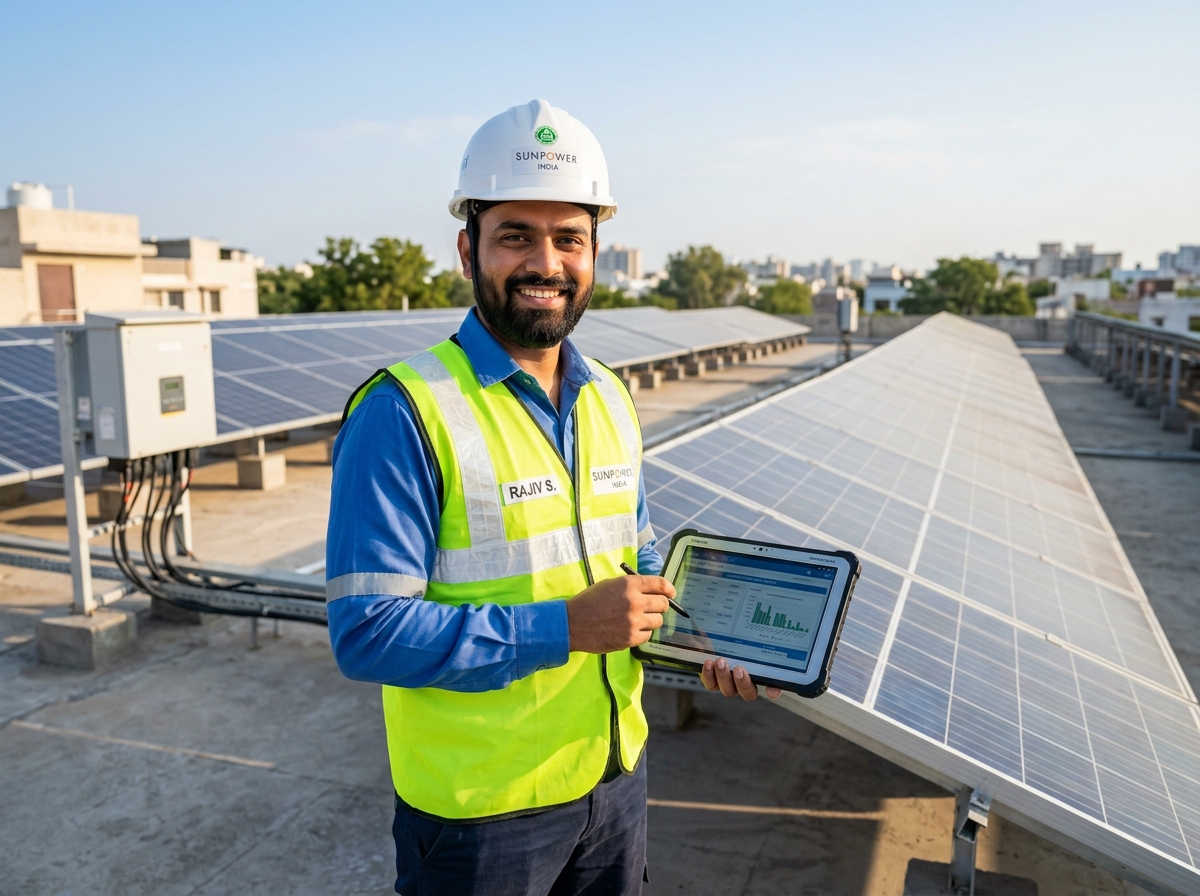
Got technical or subsidy questions? Our Gujarat empaneled EPC engineers have documented direct answers below.
FAQs
Frequently Asked Questions
How much solar subsidy do I get in Gujarat under PM Surya Ghar?
Under PM Surya Ghar Muft Bijli Yojana, Gujarat residential consumers receive ₹30,000 for 1 kW systems, ₹60,000 for 2 kW systems, and a maximum of ₹78,000 for 3 kW or larger rooftop systems.
This subsidy is deposited directly into your bank account through Direct Benefit Transfer (DBT) within 30 days after your local DISCOM (DGVCL, PGVCL, UGVCL, or MGVCL) installs and synchronizes the bi-directional net meter.
What happens to my solar power during a DGVCL grid outage?
Grid-tied solar systems automatically disconnect within 20 milliseconds whenever the public grid goes down. This safety feature, called anti-islanding protection, is mandated by CEA regulations. It protects DGVCL line workers repairing nearby overhead lines from accidental electrocution.
If you want continuous solar electricity during grid power cuts, you must add an AC-coupled hybrid inverter paired with lithium storage batteries.
How much shadow-free roof area is required for a 3kW or 5kW system?
Modern high-efficiency Mono-PERC and TOPCon modules (540Wp to 580Wp per panel) require roughly 80 to 90 square feet of shadow-free roof area per kilowatt.
A 3 kW system requires approximately 240 to 270 sq. ft., while a 5 kW system requires approximately 400 to 450 sq. ft. South-facing roofs with zero shading from parapet walls deliver peak annual generation.
How long does DGVCL net metering approval and meter testing take?
Mechanical panel mounting on your roof takes only 2 to 3 days. Total turnaround from the day of online registration on the National Solar Portal to live net-meter synchronisation by DGVCL typically runs 25 to 35 working days.
This includes transformer load clearance, laboratory meter testing and calibration, and the joint on-site inspection.
Can commercial and industrial businesses claim 40% tax depreciation?
Yes. Under Section 32 of the Income Tax Act, commercial offices, textile mills, chemical factories, and packaging units in Gujarat can claim 40% accelerated depreciation on rooftop solar installations in Year 1.
This tax shield effectively recovers over 25% of your total project capital investment in the very first financial year, accelerating overall project payback to under 3 years.
How often should solar panels be cleaned in industrial areas like Surat or Vapi?
In dusty textile clusters like Pandesara or chemical industrial belts like Sachin and Vapi, particulate soot settles on module glass surfaces. This soiling causes an 8% to 15% drop in generation if left unattended.
We recommend a gentle fresh-water rinse every 12 to 15 days, early in the morning before panels heat up. Never clean hot panels during midday sun, as thermal shock can crack the solar tempered glass.
ENERGY INDEPENDENCE STARTS TODAY
Ready to Slash Your Electricity Bills in Gujarat?
Electricity tariffs will not go down. Setting up a high-performance rooftop solar plant stops that continuous financial drain permanently. Partner with South Gujarat’s trusted local solar engineering team for certified DGVCL net-metering and maximum PM Surya Ghar subsidies.
📍 Vapi Office: Shiven Magnus, Salvav Bridge, Vapi, Gujarat | 📍 Daman Office: Shop No. 05, India House, Daman
📞 Direct Technical Consultation: +91 97277 44464 | ✉️ info@greenenergy.ind.in